
QISCA Newsletter - June 2026

June QISCA Basic Seminars and Journal Club
By Hyunwoo Kang (KHUantum)
A total of one Basic Seminar and Journal Club session was held in June 2026.
On June 1st, Jongmin Lee from KAIST presented on the "Generalized Density Matrix Renormalization Group." The presentation discussed how duality connects symmetry breaking, phases of matter, and entanglement. Noting that previous studies have shown that dualities between 1+1D lattice models can be categorically formulated by considering non-invertible symmetries, the speaker introduced an approach that integrates this framework with the density matrix renormalization group (DMRG) algorithm—a variational method for obtaining the low-energy states of gapped lattice models—to study various phases of matter. Using A4-symmetric Heisenberg chains, the speaker explained how duality can systematically map an original Hamiltonian to a specific symmetry-broken model. Furthermore, it was confirmed that when the dual symmetry aligns with the symmetry-breaking pattern of the original Hamiltonian's ground state, the entanglement of the simulated state is minimized. In conclusion, the speaker emphasized the significance of this research in providing an explicit tensor-network simulation algorithm from the perspective of the categorical Landau paradigm.
Participation in the Quantum Materials Frontier at Kyung Hee University
June 1st, 2026 (Mon)
By Sungbin Lee (SQRT)
On June 1st, 2026, QISCA members attended the "Quantum Materials Frontier 2026: Bridging Research and Industry" event held at Kyung Hee University.
This event was organized to discuss the latest research achievements and industrialization directions in the fields of quantum materials and quantum technology. Key domestic and international researchers and industry stakeholders, including the 2010 Nobel Laureate in Physics Professor Konstantin S. Novoselov, Professor Philip Kim of Harvard University, and representatives from KIST, IBS, and Pasqal, were in attendance.
Through keynote speeches and research presentations, participants learned about the trends in quantum materials, quantum computing, and the industrialization of quantum technology. They also observed the developmental trajectory of the quantum technology ecosystem being collaboratively built by academia, industry, and the government. In particular, by encountering various cases of industrial applications for research outcomes and industry-academia collaboration models, members gained valuable insights applicable to QISCA’s future academic exchanges and talent cultivation initiatives.
Furthermore, the event provided an opportunity to explore potential collaborative research and exchange partnerships through networking with researchers and students from home and abroad. It served as a meaningful occasion for members to directly experience global quantum technology research and industry trends.


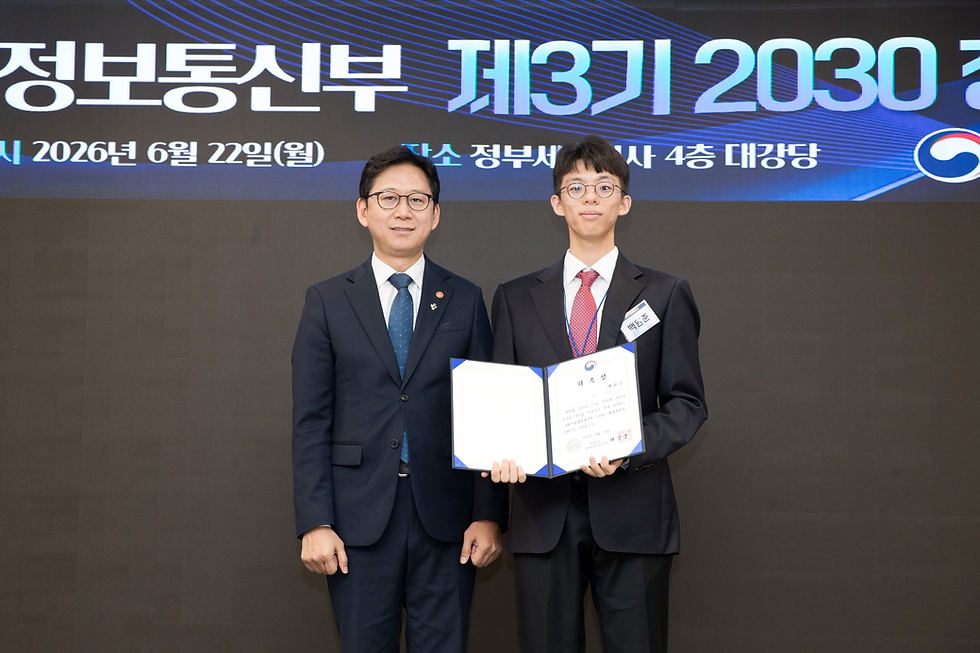
Appointment of QISCA Vice President Wonjung Baek as R&D Division Head for MSIT's "2030 Youth Policy Advisory Group"
June 22nd, 2026 (Mon)
QISCA Vice President Wonjung Baek has been appointed as the R&D Division Head (Office of the 1st Vice Minister) of the "2030 Youth Policy Advisory Group" under the Ministry of Science and ICT (MSIT). The 2030 Youth Policy Advisory Group is an advisory body designed to reflect the voices of the younger generation in science, technology, and ICT policies. Young researchers, students, and industry professionals participate in offering policy proposals and advisory activities.
Vice President Baek expressed his ambition to the Minister of Science and ICT (who also serves as Deputy Prime Minister) to lead the R&D division in discussing and proposing various policy agendas related to R&D policies, the improvement of young researchers' environments, and the cultivation of future science and technology talents.
Through this appointment, QISCA expects to deliver the voices of students in the South Korean quantum information science sector directly to the policymaking arena, contributing to the cultivation of scientific talent and the advancement of the research ecosystem. Moving forward, QISCA will continue to actively contribute to the development of the domestic quantum ecosystem as a student-led network connecting academia, industry, and the government.
Meeting with Megazone Cloud
June 8th, 2026 (Mon)
By Sungbin Lee (SQRT)
On June 8th, 2026, QISCA executives (President Sungbin Lee and Vice President Wonjung Baek) visited the Megazone Cloud Quantum Innovation Lab (QIL) to meet with Vice President Dongho Kim and Manager Hyunyoung Kim to discuss future collaboration and the direction of a Memorandum of Understanding (MOU).
QISCA shared the outcomes of Quantum Future Korea 2026 and the current status of the society, proposing various collaborative measures such as educational programs, technical seminars, hackathons, and internship and recruitment linkages. Megazone Cloud resonated with QISCA’s activities and growth potential, agreeing to positively review long-term collaboration possibilities.
This meaningful meeting, which thoroughly discussed educational programs and industry-academia cooperation projects for cultivating quantum talent, successfully laid the foundation for a cooperative relationship between QISCA and Megazone Cloud.

Meeting with Pasqal Korea
June 11th, 2026 (Thu)
By Sungbin Lee (SQRT)
On June 11th, 2026, the QISCA executive board visited Pasqal Korea to hold a meeting with Managing Director Hyungjoo Chung, discussing potential collaboration and the signing of a Memorandum of Understanding (MOU).
QISCA shared the achievements of hosting Quantum Future Korea 2026 and the operational status of the society, outlining future project plans such as talent cultivation, academic exchanges, and industry linkage programs. Additionally, QISCA presented draft MOU documents prepared in both Korean and English, exchanging views on potential areas of cooperation.
This meeting served as an opportunity for QISCA to reaffirm its principles and independence as a non-profit academic organization while pursuing industry-academia collaborations. At the same time, it was a significant occasion that confirmed the potential for practical support and cooperation from the industry.

Meeting with Quantinuum
June 12th, 2026 (Fri)
By Sungbin Lee (SQRT)
On June 12th, 2026, QISCA held a meeting with the Quantinuum Singapore branch to discuss directions for collaboration within the global quantum ecosystem. During this meeting, moving beyond simple technological introductions, QISCA focused on the potential to build a community-based quantum ecosystem in the Asia-Pacific region.
Quantinuum shared its startup support programs and plans for operating internships and hackathons. Through these discussions, QISCA projected that Quantinuum's direction—which emphasizes securing end-users and revitalizing communities as core strategies—shares strong common ground with the domestic student community.

Meeting with KQIA President Sunghyuk Kim
June 16th, 2026 (Tue)
By Sungbin Lee (SQRT)
QISCA held an online Zoom meeting with Sunghyuk Kim, President of the Korea Quantum Industry Association (KQIA), to discuss strategies for advancing industry-academia collaboration and sponsorship structures within the quantum ecosystem. The meeting was attended by QISCA President Sungbin Lee, Vice President Wonjung Baek, and Secretary-General Gayeon Kim.
In terms of industry linkages, various collaboration models were discussed, including LG Sciencepark tours, working group collaborations, and participation in exhibitions and seminars. A consensus was formed that practical cooperation programs could be prioritized regardless of an official MOU signing. In particular, the expansion of student-participatory programs such as internships, hackathons, and short-term projects was highlighted as a core objective. Both parties agreed to materialize MOU proceedings and follow-up collaboration discussions after the Quantum Korea event.

Meeting with the MSIT Quantum Innovation Technology Development Division
June 18th, 2026 (Thu)
By Sungbin Lee (SQRT)
On June 18th, 2026, QISCA held a meeting with the Quantum Innovation Technology Development Division of the Ministry of Science and ICT (MSIT). QISCA President Sungbin Lee and Vice President Wonjung Baek attended, alongside MSIT officials including Director-General of Fundamental Research Policy Kyungsuk Yoon, Quantum Innovation Technology Development Division Director Sungwook Jung, Deputy Director Yongjun Hwang, and Deputy Director Jinhyeok Lim.
MSIT evaluated that QISCA's activities share similar goals with the Quantum Information Research Support Center in terms of expanding the base of the quantum field. In particular, they noted the positive significance of QISCA's role in drawing students into the quantum sector and expanding the community.
Furthermore, a suggestion was made to inquire with relevant institutions so that QISCA members could participate in networking events hosted by the embassies of the United States, the United Kingdom, Canada, Finland, and Australia during the 2026 Quantum Korea event. This is expected to greatly assist in expanding students' international exchanges and global networks.
Through this meeting, QISCA discussed the concrete potential for collaboration with the government, paving the way to expand cooperative foundations across various areas, including hosting conferences, fostering international exchanges, and providing event support.

Korea Foundation for Advanced Studies (KFAS) Overseas Study Scholarship Award Ceremony
June 22nd, 2026 (Mon)
By Sungbin Lee (SQRT)
QISCA's inaugural President, Sungbin Lee, was selected as a 49th Overseas Study Scholar by the Korea Foundation for Advanced Studies (KFAS) and was awarded the scholarship. The KFAS Overseas Study Scholarship is one of the most prestigious scholarship programs in South Korea, selecting students with academic excellence and future growth potential to support their studies and research at top-tier global universities.
The award ceremony was attended by prominent figures representing South Korean academia, including Chey Tae-won, Chairman of SK Group and Chairman of the KFAS Board of Directors, as well as Seoul National University (SNU) Professors Taeghwan Hyeon (School of Chemical and Biological Engineering), Junho Lee (School of Biological Sciences), and Dongwhan Lee (Department of Chemistry), who gathered to encourage the scholars.
President Sungbin Lee's selection is highly meaningful as it goes beyond individual achievement to demonstrate the exceptional human resources within QISCA. As a community where students, researchers, and industry talents interested in quantum science and technology grow together, QISCA continues to produce members who excel across various domestic and international research, educational, and industrial fields.
Moving forward, QISCA will continue to support its members in securing world-class educational and research opportunities to showcase their capabilities on the global stage, dedicating itself to cultivating the next generation of talent to contribute to the advancement of South Korea's quantum science and technology.

Meeting with IQM Korea Country Manager Youngsim Kim
June 23rd, 2026 (Tue)
By Sungbin Lee (SQRT)
On June 23rd, 2026, QISCA held a meeting with Youngsim Kim, Country Manager of IQM Korea, to discuss talent cultivation, educational collaboration, internships, and event cooperation.
IQM expressed high interest in recruitment and talent acquisition, requesting QISCA to actively recommend outstanding individuals. In particular, they explained their preference for candidates who have completed or are exempt from military service, possess excellent English proficiency, and have a solid understanding of quantum computing, adding that bachelor's degree holders are also eligible for employment.
In the education sector, strategies to expand the use of the IQM Academy were discussed. IQM showed interest in a diploma issuance program upon completing the education. They also shared the opinion that beyond the existing Qiskit-centric education, it is vital to uncover Qrisp-based training and practical user cases.
Through this meeting, QISCA and IQM agreed to expand their collaborative foundation across various fields, including talent cultivation, educational program operations, international event cooperation, and potential future internship linkages.

Meeting with Hansung Son Jae Han Scholarship Foundation Chairman Myung-ah Son
June 24th, 2026 (Wed)
By Sungbin Lee (SQRT)
On June 24th, 2026, seven QISCA members, including President Sungbin Lee and Vice President Wonjung Baek, visited the Hansung Son Jae Han Scholarship Foundation for a meeting with Chairman Myung-ah Son to discuss collaborative measures for expanding the base of quantum science and technology and nurturing future talent.
Chairman Son highly praised QISCA's efforts to popularize the quantum field and expand student participation, showing particular interest in the fact that around 30 QISCA members are alumni of the Hansung Nobel Young Scholar program.
The discussion focused heavily on ways to link with scientific talent networks. Chairman Son offered to support connections with the National Association of Science Teachers, which involves science teachers from general high schools. She also suggested that seeking advice from Hansung Science Award laureates, such as Professor Jungwan Ha of Stanford University and Professor Kyuboung Cho of Rice University, would be beneficial.
Furthermore, Chairman Son proposed that QISCA participate in the 13th Hansung Summer Camp, scheduled for August 14th to 17th, to introduce the organization to approximately 180 new scholars. This is expected to be a prime opportunity to introduce the quantum science and technology field to outstanding youth talent and expand their interest and participation.
QISCA plans to continuously expand its collaborations with various educational and scholarship institutions, including the Hansung Son Jae Han Scholarship Foundation, consistently striving for the growth of the domestic quantum ecosystem and the cultivation of next-generation talent.

Daejeon Science High School Quantum Career Seminar
June 28th, 2026 (Sun)
By Sungbin Lee (SQRT)
On June 28th, 2026, QISCA held a quantum information science career seminar at Daejeon Science High School. This event was organized to enhance students' understanding of quantum science and technology and to support them in exploring career paths in key future technology sectors.
The seminar introduced changes to the future information security landscape, focusing on the impact of quantum computer advancements on existing cryptographic systems and the consequent need for Post-Quantum Cryptography (PQC). Additionally, the principles and applications of quantum communication technology were explained, alongside an overview of the anticipated changes across various fields—such as security, finance, defense, and telecommunications—should a quantum network be realized.
Following this, career trajectories in the quantum science and technology sector were introduced, detailing major research areas like quantum computing, quantum communication, and quantum sensing, as well as pathways into related academic departments, research institutions, and the industry. By sharing various career examples, including domestic and international university and graduate school admissions, research activities, and industry employment, and by holding a Q&A session, the speakers provided actionable advice for future career planning.
This seminar served as a stepping stone for Daejeon Science High School students to understand the latest trends in quantum science and technology—a national strategic technology—and to map out their future careers in detail. QISCA plans to continue expanding its quantum education and career mentoring for middle and high school students nationwide, contributing to the cultivation of future quantum talent.


Participation in the Korea-Australia Global R&D Collaboration Forum
June 30th, 2026 (Tue)
By Sungbin Lee (SQRT)
On June 30th, 2026, QISCA President Sungbin Lee participated in the Korea-Australia Global R&D Collaboration Forum, expanding the foundation for international cooperation by networking with Australian quantum technology companies, universities, research institutes, and government officials.
At this forum, QISCA met with organizations and companies representing the Australian quantum ecosystem to discuss collaboration possibilities across various fields, including research, education, internships, and international events. With Quantum Australia, which supports industry-academia-research collaboration in the Australian quantum ecosystem, discussions centered on participating in the Quantum Australia Conference scheduled for 2027 and ways to expand exchanges between the quantum communities of both nations.
With Emergence Quantum, a startup developing photonic integrated circuit-based quantum computing technology, the potential for running a global internship program for QISCA members was discussed. Analog Quantum Circuits, which researches quantum hardware and applied technologies, also expressed interest in international internship collaborations for students and young researchers.
Eigensystems, a developer of educational quantum computing platforms, introduced a 30-qubit portable quantum emulator and proposed ways to utilize it in domestic educational programs. Furthermore, discussions with Q-CTRL, a world-leading quantum control software company, revolved around providing quantum computing educational content and materials, exploring potential linkages with QISCA's educational programs in the future.
Views on touring electrical, electronic, and computer engineering research facilities and student exchange programs were exchanged with the University of Queensland, Australia's leading research-intensive university, along with discussions on the potential for expanding future research collaborations. QISCA also met with representatives from Silex Systems, a developer of laser and quantum technologies, to share trends in the Australian quantum industry and discuss future collaboration possibilities.
During the event, QISCA also met with officials from the Australian Embassy in Korea to discuss ways to broaden bilateral quantum technology cooperation. Both parties agreed to maintain ongoing cooperation by exchanging opinions on various collaborative measures, such as inviting Australian researchers and professors, co-hosting international events, and building research networks.
This forum served as an opportunity for QISCA to expand collaborations with the global quantum ecosystem beyond South Korea and to build a network to provide members with international research, education, and internship opportunities. QISCA plans to continuously expand its partnerships with major global quantum institutions and companies to actively support domestic quantum talents' global advancement.


Participation in the Canada-Korea Quantum Innovation Forum
June 30th, 2026 (Tue)
By Sungbin Lee (SQRT)
On June 30th, 2026, QISCA participated in the Canada-Korea Quantum Innovation Forum, interacting with key Canadian quantum technology companies and research institutions to discuss international collaboration strategies. QISCA Vice President Wonjung Baek attended the event, working to broaden networks with the global quantum ecosystem and explore collaborative possibilities in education, research, and internships.
The event featured participation from institutions and companies representing diverse fields such as quantum computing, quantum software, quantum materials, and optical design, including the National Research Council Canada (NRC). In a meeting with NRC R&D Director Kevin Thomson and Quantum Strategy Director Michael Rosenblatt, both parties shared the current state of international cooperation in the quantum sector, agreed to continuously update the progress of the UW project, and reviewed potential future support avenues.
David Antoniuk, CEO of the quantum materials company Applied Quantum Materials, proposed to connect with any students or researchers interested in quantum materials at any time, discussing potential future research collaborations. Greg Dick, CEO of the photonics-based quantum computing company Open Quantum Design (OQD), mentioned that he had known about QISCA for a long time and had been observing its activities very positively. He also expressed a desire to stay in touch and collaborate moving forward. QISCA also discussed future research and technological collaboration possibilities with Nicola Montaut, Research Director of Quantum Reconnaissance Service Corp., a quantum network and security technology company.
Participating in the Canada-Korea Quantum Innovation Forum served as a catalyst for QISCA to build direct cooperation networks with Canada's leading research institutions and quantum technology companies. It established a foundation to expand practical collaboration across various fields, including joint research, global internships, educational programs, and international exchanges. QISCA will continue to strive to provide global opportunities for domestic students and researchers by consistently expanding its partnerships with major quantum technology institutions worldwide.


Comments